The Joaillier Gest: where the hand forms the metal
There is a silent dialogue between hand and matter in the jewellery craft. An exchange where precision...
Further information

In a jewellery workshop, certain gestures remain invisible at first glance. It includes crimping and polishing. These two trades, often unknown, allow each jewel to express its appearance fully.
The trimmer and polisher each work in their specialty. They often intervene at the end of manufacturing, when the frame already exists and volumes are defined. Their role is decisive: they secure the stones and reveal the surface of the metal. The jewel then becomes final.
Although a versatile jeweller can complete some of these steps, these know-how remain full-fledged trades, transmitted in precision and patience.
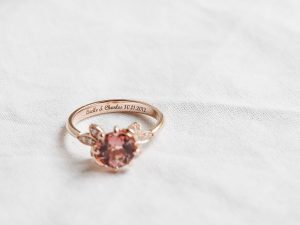
The setting consists of keeping a precious stone in its frame. The gesture seems simple, but it requires great rigour. The stone must be solid, stable and perfectly aligned. Each crimp requires a particular approach. The shape of the stone, the type of metal, the use of the jewel and the aesthetic sought influence the chosen technique.
• Drying claws: This crimping remains one of the most used. The trimmer flap of fine claws around the stone. It leaves a lot of light and is particularly suitable for diamonds and sapphires.
• Drying closed: A thin strip of metal completely surrounds the stone. This crimping ensures great safety and clean rendering. It highlights stones of character or those intended to be worn every day.
• Mass drying: The stone inserts into the material itself of the jewel. Metal protects it from shocks and offers a contemporary look.
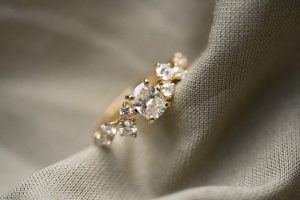
• Grain drying: Small metal beads hold several stones close to each other. The surface becomes delicately punctuated with shrapnel.
Each technique requires careful reading of stone and volume. The trimmer must feel how far to go to secure the gem without altering its finesse.
⸻
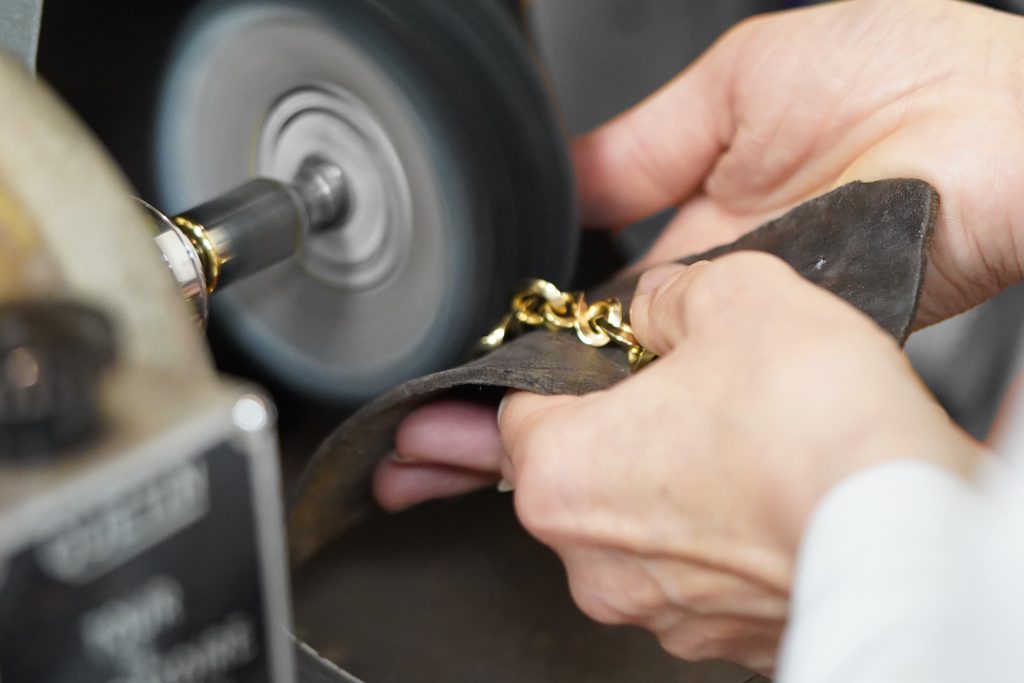
Polishing occurs at all ends of manufacture. This step gives gold its final texture. The polisher erases traces of tools, softens lines and harmonizes surfaces.
Without this step, even the most beautiful creation would remain rough. The polishing gives the jewel a pleasant touch, a sharper radiance, and a finish worthy of jewellery know-how.
There are several types of polishing, from satin to gloss, each chosen according to the aesthetic desired. Their common point: extreme precision. Any excess removes too much matter, any omission leaves a visible defect.
Setting and polishing occur when the jewel is almost finished. These are occupations of patience where every gesture remains measured.
The crimper ensures the safety and presentation of each stone. The polisher harmonizes the surface, gives a presence, a character.
These two specialties give the jewel its finish, comfort and durability. They allow the creation to leave the workshop with all the nobility that a craft jewel demands.
At the Almarose Workshop, we pay great attention to these steps. We do some in-house crimping and collaborate with skilled artisans when the project requires it. Polishing is also part of our daily know-how, with the same requirement as for our custom-made creations.
Every stone deserves a precise gesture. Each jewel deserves a clean and neat finish.
This respect for detail embodies our way of working: craft jewellery, sincere and rigorous.

His will is to imagine and create the jewel you dream of, respecting the environment and every human being who participates in his making.